7 Jun 2026
Charting Assistance Routes That Enhance Mobility in Reward Systems Spanning Reels, Tables, and Wagers
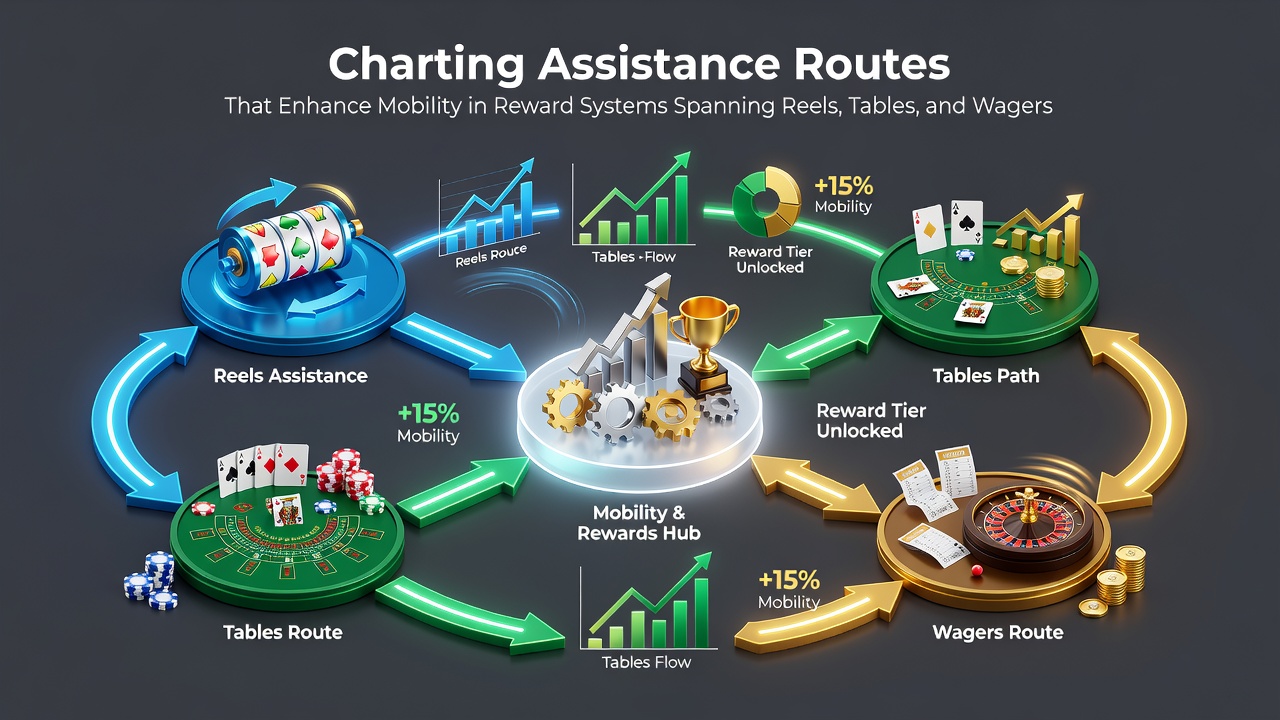
Operators have developed structured assistance routes that allow participants to transfer progress and benefits across slot machines, table games, and wagering platforms without resetting accumulated status. These systems rely on unified loyalty frameworks that track activity through centralized databases, and data from the American Gaming Association shows integrated programs now cover more than 65 percent of major North American casino floors as of mid-2026.
Core Components of Cross-Vertical Reward Pathways
Reward mobility begins with tiered loyalty accounts that assign points based on handle rather than game type alone, which means a session on reels contributes to table game comps and vice versa. Studies conducted by the University of Nevada Reno Gaming Research Center indicate that such unified ledgers reduce player churn by linking daily wagers directly to monthly tier evaluations, and participants often reach higher status levels within the same calendar quarter when routes span multiple verticals.
Assistance tools include mobile dashboards that display real-time point balances alongside suggested next actions, whether those involve high-limit table sessions or live sports markets. The design incorporates conditional multipliers that activate once a player completes a predetermined sequence, such as a reel spin streak followed by a table minimum bet, and these multipliers apply uniformly across linked accounts.
Implementation Patterns Observed in June 2026
By June 2026 several regional operators had expanded their assistance infrastructure to include instant status transfers between land-based and online environments. Figures released by the Canadian Gaming Association reveal that 48 percent of surveyed properties now permit same-day conversion of slot points into table game free-play credits, while sports wager volume contributes an additional 22 percent to overall loyalty acceleration.
Route mapping software guides users through optimal sequences by highlighting time-limited events that combine reel tournaments with table side bets and wager boosts. These sequences typically require three to five linked activities within a 48-hour window, after which the system unlocks expedited tier reviews without manual intervention from support staff.
Technical Mechanisms Supporting Seamless Transitions
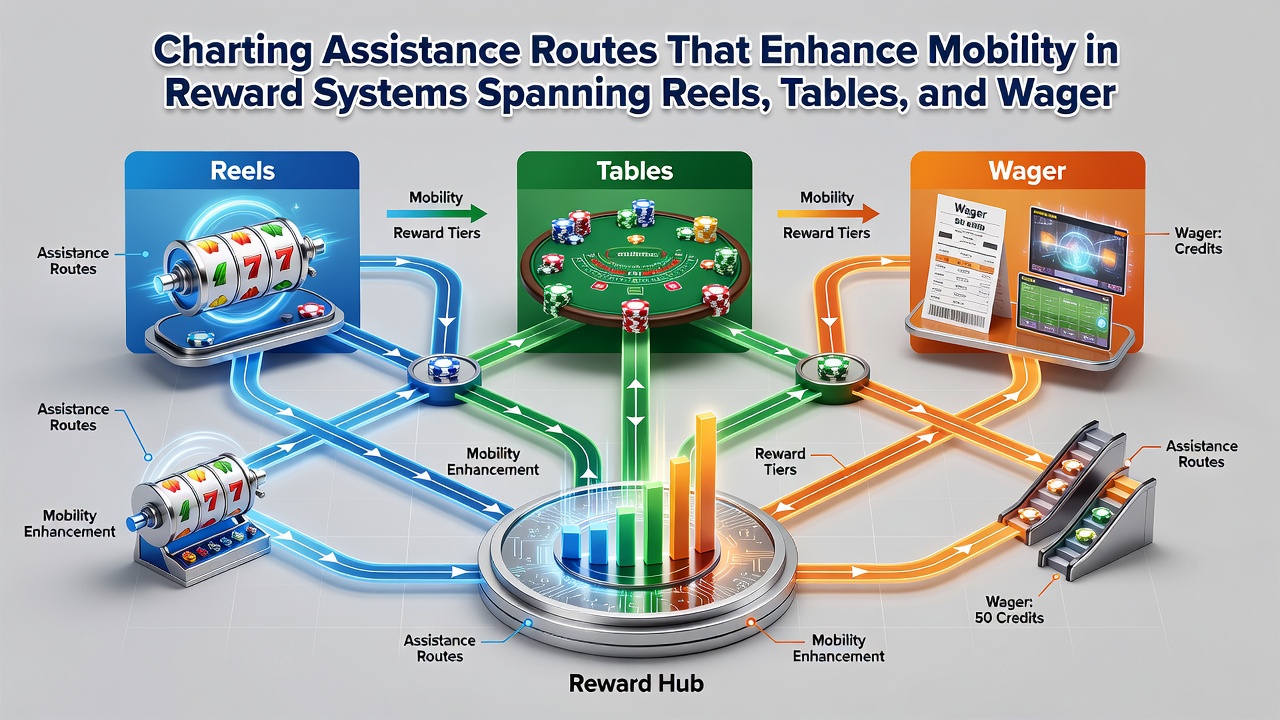
Backend integration relies on API connections between slot management systems, table game tracking modules, and sports book platforms, which allows point ledgers to update within seconds of each qualifying action. Observers at the European Casino Association conferences note that standardized data protocols adopted in early 2025 enabled cross-border operators to maintain consistent mobility rules even when regulatory frameworks differ by jurisdiction.
Security layers incorporate multi-factor authentication tied to the same account used for financial transactions, and audit logs record every point transfer to satisfy compliance requirements from bodies such as the Nevada Gaming Control Board. When a player shifts from reels to tables, the system automatically adjusts comp eligibility based on average bet size rather than game category, preserving continuity in the reward calculation.
Player Navigation Tools and Reporting Features
Assistance interfaces present visual maps that outline required activity thresholds for each tier elevation, and these maps update dynamically as new promotions appear in any of the three verticals. Research published by the Queensland University of Technology School of Business indicates that players who follow mapped routes complete tier climbs 31 percent faster than those navigating independently, primarily because the tools surface overlapping events across reels, tables, and wagers.
Monthly statements break down contribution percentages by category, allowing participants to identify which vertical currently drives the largest share of their progress. When one category underperforms, the system suggests targeted alternatives within the remaining verticals to maintain momentum toward the next assistance milestone.
Conclusion
Unified reward mobility across reels, tables, and wagers continues to evolve through incremental technical upgrades and regulatory alignment. Data from multiple industry sources demonstrates measurable reductions in fragmentation when operators maintain synchronized ledgers and accessible route guidance, and these patterns are expected to shape program design through the remainder of 2026 and beyond.